






Oil and Gas Investing Glossary
Offering documents, tax guides and market news use terms that are new to many investors. The A to Z glossary below explains them in plain language.
Glossary terms from A to Z
Showing all 88 terms.
A
- Accredited investor
-
An accredited investor meets an SEC income or net worth test: individual income over $200,000 (or joint income with a spouse over $300,000) in each of the past two years, with a reasonable expectation of the same this year, or a net worth over $1,000,000, not counting a primary residence. The full definition, which also covers certain professionals and entities, is in SEC Rule 501(a). Guardian verifies accredited status before it sends the Prospectus.
See also: Regulation D, Subscription agreement
- API gravity
-
API gravity is the American Petroleum Institute’s measure of how heavy or light a crude oil is compared with water. Lighter crude has a higher API gravity and usually sells for a higher price.
- Assignment
-
An assignment is the legal document that transfers an ownership interest in a well or lease, such as a working interest, from one party to another. It is usually recorded in the county where the property is located.
- Associated gas
-
Associated gas is natural gas produced along with crude oil from the same well.
- Authority for expenditure (AFE)
-
An authority for expenditure is the operator’s cost estimate for drilling or completing a well, which the working-interest owners approve before the work begins. Actual costs can come in higher or lower than the estimate.
See also: Cash call, Joint interest billing (JIB)
B
- Barrel (bbl)
-
A barrel is the standard unit for crude oil, equal to 42 U.S. gallons. Oil prices are quoted in dollars per barrel.
See also: Barrel of oil equivalent (BOE), Barrels per day (bpd)
- Barrel of oil equivalent (BOE)
-
A barrel of oil equivalent puts oil and natural gas on one scale by energy content. By a common industry convention, 6,000 cubic feet (6 Mcf) of natural gas counts as one BOE.
See also: Barrel (bbl), Mcf
- Barrels per day (bpd)
-
Barrels per day is the standard way to state an oil production rate, whether for one well, a company or a country.
- Basin
-
A basin is a large, low area of the earth’s crust where thick layers of sediment built up over millions of years. Most U.S. oil and gas comes from basins such as the Permian in West Texas and New Mexico.
See also: Permian Basin, Formation
- Bonus depreciation
-
Bonus depreciation lets a business deduct a large share of the cost of qualifying equipment in the year it is placed in service, instead of over several years. Under current law, 100% bonus depreciation may apply to tangible drilling costs.
See also: Tangible drilling costs (TDCs)
- Brent crude
-
Brent crude is a blend of North Sea oils and the main international benchmark price for crude oil. Oil market news usually quotes Brent, West Texas Intermediate or both.
See also: West Texas Intermediate (WTI), OPEC+
C
- Cash call
-
A cash call is a request from the operator for working-interest owners to pay their share of costs, for example for drilling, completion or a major repair. Each program’s offering documents set out whether investors can be asked for more money.
See also: Authority for expenditure (AFE), Joint interest billing (JIB)
- Casing
-
Casing is steel pipe set and cemented in a wellbore to keep it stable and to keep oil, gas and water in their own zones.
- Completion
-
Completion is the work that prepares a drilled well to produce. It includes setting casing, opening the target formation to the wellbore and installing the equipment that brings oil or gas to the surface.
- Condensate
-
Condensate is a very light liquid hydrocarbon that separates from natural gas as it reaches the surface. It is usually sold with light crude oil or priced like it.
- Crude oil
-
Crude oil is unrefined petroleum as it comes out of the ground. Refineries turn it into gasoline, diesel, jet fuel and other products.
D
- Decline curve
-
A decline curve shows how a well’s production falls over time. Most wells produce the most in their early months, and output then declines, so the revenue from a well usually falls over its life.
See also: Initial production (IP)
- Depletion allowance
-
Depletion applies once production begins. It lets the owner of a producing oil or gas well recover the investment through tax deductions over the period in which oil or gas is produced. The depletion deduction is generally 15% of gross income for the life of the well, subject to IRS limits.
See also: Independent producer
- Development well
-
A development well is drilled in an area where oil or gas has already been found, to produce more from a known reservoir. It usually carries less geological risk than an exploratory well.
See also: Exploratory well, Offset well
- Directional drilling
-
Directional drilling steers the wellbore at an angle, rather than straight down, to reach a target that is not directly below the rig.
See also: Horizontal drilling
- Distribution
-
A distribution is a payment to owners from a well’s revenue. When wells produce, owners can receive a share of the monthly revenue. Payments rise and fall with production and prices, and they are not guaranteed.
See also: Revenue statement
- Division order
-
A division order is a document from the operator or the buyer of the production that states each owner’s decimal share of a well’s revenue. Owners sign it so payments can be made.
- Dry hole
-
A dry hole is a well that does not find oil or gas in amounts worth producing. Dry holes are one of the main risks of drilling, and the money spent on a dry hole can be lost.
See also: Exploratory well, Risk factors
E
- Enhanced oil recovery (EOR)
-
Enhanced oil recovery covers methods, such as injecting carbon dioxide, steam or chemicals, that recover oil that ordinary production and waterflooding leave behind in a reservoir.
- Exploratory well
-
An exploratory well is drilled to find oil or gas in an area or formation that has not produced before. It carries more risk than a development well.
See also: Wildcat well, Development well
F
- Farmout
-
A farmout is an agreement in which a leaseholder assigns part of its working interest to another company in return for that company drilling a well.
- Formation
-
A formation is a distinct layer of rock with its own name, such as the Woodbine or the Eagle Ford in Texas. Oil and gas are produced from the formations that hold them.
See also: Reservoir
G
- Gathering system
-
A gathering system is the network of small pipelines that carries oil or gas from wells to a processing plant or a larger pipeline.
See also: Midstream
- General partner
-
The general partner manages a limited partnership’s operations and reporting. Unlike limited partners, a general partner is generally liable for the partnership’s debts.
See also: Limited partnership (LP), Limited partner
H
- Horizontal drilling
-
Horizontal drilling turns the wellbore sideways once it reaches the target formation, so the well runs through much more of the rock. It is used widely in shale formations.
See also: Hydraulic fracturing, Shale
- Hydraulic fracturing
-
Hydraulic fracturing, often called fracking, pumps water, sand and additives into a well at high pressure to open small cracks in the rock so oil and gas can flow.
See also: Horizontal drilling, Shale
I
- Independent producer
-
An independent producer is an oil and gas company that explores for and produces oil and gas but does not run large refining or retail operations. Federal tax law treats independent producers and royalty owners differently from integrated oil companies, for example for percentage depletion.
- Initial production (IP)
-
Initial production is a well’s output rate in its first days or months, often quoted in barrels per day. Because most wells decline after their first months, an initial production rate does not show what a well will produce over its life.
See also: Decline curve
- Intangible drilling costs (IDCs)
-
Intangible drilling costs are the labor and supplies needed to drill the well and prepare it for production of oil and gas. They are approximately 80% of the total cost of the investment and are generally 100% deductible in the year of investment.
See also: Tangible drilling costs (TDCs), Depletion allowance
J
- Joint interest billing (JIB)
-
A joint interest billing is the operator’s monthly statement that charges each working-interest owner its share of drilling and operating costs.
- Joint operating agreement (JOA)
-
A joint operating agreement is the contract among the working-interest owners of a well or lease that names the operator and sets out how costs, decisions and revenue are shared.
See also: Operator
L
- Landman
-
A landman researches mineral ownership, negotiates leases and handles the title work needed before a well is drilled.
- Lease operating expenses (LOE)
-
Lease operating expenses are the ongoing costs of running a producing well, such as power, pumping, repairs and saltwater disposal. They are usually deducted from revenue on the owner’s monthly statement.
- Limited partner
-
A limited partner invests in a limited partnership but does not manage it. A limited partner’s liability is generally limited to the amount invested.
See also: General partner, Limited partnership (LP)
- Limited partnership (LP)
-
A limited partnership has a general partner, which manages operations and reporting, and limited partners, who invest. Each program’s structure is set out in its offering documents.
See also: General partner, Limited partner
M
- Mcf
-
Mcf means one thousand cubic feet, the standard unit for natural gas volume. MMcf means one million cubic feet.
See also: MMBtu, Barrel of oil equivalent (BOE)
- Midstream
-
Midstream is the part of the industry that gathers, processes, stores and transports oil and gas between the wellhead and the refinery or end user.
See also: Upstream, Gathering system
- Mineral rights
-
Mineral rights are the ownership of the oil, gas and other minerals beneath a piece of land. They can be owned separately from the surface, and the owner can lease them to a company that drills.
See also: Oil and gas lease, Royalty interest
- MMBtu
-
MMBtu means one million British thermal units, a measure of energy. U.S. natural gas prices are usually quoted in dollars per MMBtu.
N
- Natural gas
-
Natural gas is a mix of hydrocarbon gases, mostly methane, produced from underground reservoirs. It is measured by volume in Mcf or by energy content in MMBtu.
See also: Associated gas, Natural gas liquids (NGLs)
- Natural gas liquids (NGLs)
-
Natural gas liquids are hydrocarbons such as ethane, propane and butane that are separated from natural gas at a processing plant and sold on their own.
- Net acres
-
Net acres are the acres an owner holds after applying its ownership share. For example, a 25% working interest in a 640-acre lease equals 160 net acres.
- Net revenue interest (NRI)
-
A net revenue interest is the share of a well’s production revenue that belongs to an owner after royalty interests are paid. Operating costs are then charged against the working interest.
See also: Working interest, Royalty interest, Division order
O
- Offset well
-
An offset well is an existing well near a planned well. Production from offset wells is one of the ways a team judges what a new well in the same area may find.
See also: Development well
- Oil and gas lease
-
An oil and gas lease is the contract in which a mineral owner grants a company the right to explore for and produce oil and gas, usually in return for an upfront bonus and a royalty. Most leases run for a set primary term and then continue for as long as the land produces.
See also: Primary term, Royalty interest
- OPEC+
-
OPEC+ is the group of OPEC members and allied producers, including Russia, that coordinate oil production targets. Its decisions can move world oil prices.
See also: Brent crude
- Operator
-
The operator is the company that runs the day-to-day work on a well, including drilling, completion, production and the monthly accounting for the owners.
See also: Joint operating agreement (JOA)
- Overriding royalty interest (ORRI)
-
An overriding royalty interest is a share of production revenue carved out of the working interest. Like a royalty, it bears no drilling or operating costs, and it usually ends when the lease ends.
See also: Royalty interest
P
- Passive activity rules
-
The passive activity rules, introduced by the Tax Reform Act of 1986, generally stop losses from passive activities from offsetting income from active businesses. The Tax Code states that a working interest in an oil and gas well is not a passive activity, so its deductions may offset active income.
See also: Working interest
- Payout
-
Payout is the point at which a well’s cumulative net revenue has repaid the cost of drilling and completing it. Some agreements change the owners’ shares after payout, and not every well reaches it.
- Permian Basin
-
The Permian Basin in West Texas and southeastern New Mexico is the largest oil-producing region in the United States.
See also: Basin
- Plugging and abandonment (P&A)
-
Plugging and abandonment is the required work of sealing a well with cement and restoring the site when the well stops producing. The cost is usually shared by the working-interest owners.
- Pooling
-
Pooling combines several tracts or leases into one unit so a well can be drilled and its production shared among the owners in proportion to their acreage.
- Primary term
-
The primary term is the set period, often three to five years, in which a company must start drilling or producing to keep an oil and gas lease. After that, the lease usually continues for as long as the land produces.
- Private placement memorandum (PPM)
-
A private placement memorandum is the offering document for a private offering. It describes the investment, its terms, its costs and its risk factors. Guardian’s offerings are documented by a private placement memorandum.
See also: Risk factors, Subscription agreement
- Production
-
Production is the oil, gas and liquids a well brings to the surface and sells, usually measured per day or per month.
- Prospect
-
A prospect is an area that geologists and engineers have identified as likely to hold oil or gas in amounts worth drilling for. A prospect is a target, not a proven result.
See also: Seismic survey, Offset well
- Pumpjack
-
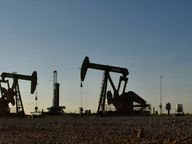
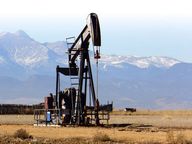
A pumpjack is the familiar rocking surface pump that lifts oil from a well once natural pressure is no longer enough to push it to the surface.
R
- Railroad Commission of Texas (RRC)
-
The Railroad Commission of Texas regulates the state’s oil and gas industry, including drilling permits, well records and production reports. Despite its name, it no longer regulates railroads.
- Regulation D
-
Regulation D is a set of SEC rules that lets a company raise money through a private offering without registering the securities with the SEC. Guardian’s offerings are private offerings under Regulation D, open only to accredited investors.
See also: Accredited investor, Private placement memorandum (PPM)
- Reserves
-
Reserves are estimated amounts of oil and gas that can be produced profitably from known reservoirs under current conditions. They are graded proved, probable and possible, from most to least certain, and they are estimates, not guarantees.
See also: Reservoir
- Reservoir
-
A reservoir is a body of porous rock that holds oil or gas, sealed by layers of rock that keep it in place.
- Revenue statement
-
A revenue statement, often called a check stub, comes with each distribution. It shows the well’s volumes, the price received, taxes and expenses, and the owner’s net share.
See also: Distribution
- Rig count
-
The rig count is a weekly tally of the drilling rigs at work, published by Baker Hughes. Analysts watch it as a sign of future production.
- Risk factors
-
Risk factors are the section of an offering document that explains how an investment could lose money, for example through dry holes, falling production, lower prices or changes in tax law. Full risk factors are disclosed in the offering documents, and the disclosures page summarizes the main risks.
See also: Dry hole, Private placement memorandum (PPM)
- Royalty interest
-
A royalty interest is a share of production revenue, usually kept by the mineral owner when the minerals are leased. Royalty owners do not pay drilling or operating costs, and they have no say in how the well is run.
See also: Working interest, Overriding royalty interest (ORRI)
S
- Seismic survey
-
A seismic survey sends sound waves into the ground and records their echoes to map the rock layers below, and a 3D survey builds a three-dimensional picture. Seismic data helps a team choose where to drill, but it does not guarantee that a well will produce.
See also: Prospect
- Severance tax
-
Severance tax is a state tax on oil and gas when it is produced, or severed, from the ground. It is usually withheld from production revenue before owners are paid.
- Shale
-
Shale is a fine-grained rock that can hold oil and gas but lets them flow only slowly. Horizontal drilling and hydraulic fracturing made large-scale shale production possible.
See also: Horizontal drilling, Hydraulic fracturing
- Shut-in well
-
A shut-in well can produce but is temporarily closed, for example for repairs, low prices or a lack of pipeline space. A shut-in well earns no revenue while it is closed.
- Spud
-
To spud a well is to begin drilling it. The spud date is the day drilling starts.
- Step-up in basis
-
When an heir inherits an asset, its cost basis is generally reset to its fair market value at the date of death. Under current law, this can apply to an inherited oil and gas interest.
- Subscription agreement
-
A subscription agreement is the document an investor signs to buy into a private offering. It confirms the amount invested and the investor’s statements about eligibility, such as accredited status.
See also: Private placement memorandum (PPM), Accredited investor
T
- Tangible drilling costs (TDCs)
-
Tangible drilling costs cover hard assets such as the wellhead and production equipment. TDCs are approximately 20% of the total cost of the investment. Under current law, 100% bonus depreciation may allow the full cost of TDCs to be deducted in the year the equipment is placed in service.
See also: Bonus depreciation, Intangible drilling costs (IDCs)
- Total depth (TD)
-
Total depth is the final depth a well reaches when drilling stops.
U
- Upstream
-
Upstream is the part of the industry that explores for and produces oil and gas. Working-interest owners invest in the upstream segment.
See also: Midstream
V
- Vertical well
-
A vertical well is drilled straight down to its target. Vertical wells usually cost less to drill than horizontal wells, and they reach less of the formation.
See also: Horizontal drilling
W
- Wellbore
-
The wellbore is the hole drilled into the ground, including the casing set inside it.
- Wellhead
-
The wellhead is the equipment at the top of a well that controls pressure and connects the well to the production equipment.
- West Texas Intermediate (WTI)
-
West Texas Intermediate is a light, sweet U.S. crude oil and one of the two main benchmark prices for crude oil. It is priced at Cushing, Oklahoma.
See also: Brent crude
- Wildcat well
-
A wildcat well is an exploratory well drilled far from existing production. Wildcat wells carry the highest risk of a dry hole.
See also: Exploratory well, Dry hole
- Working interest
-
A working interest is direct ownership in an oil or gas well, not a passive royalty. The owner shares in the costs of drilling and operating the well and in the revenue it produces. The Tax Code states that a working interest in an oil and gas well is not a passive activity.
See also: Net revenue interest (NRI), Royalty interest
- Workover
-
A workover is repair or maintenance work on an existing well to restore or increase its production.
Tax treatment depends on each investor’s circumstances and current law. Review the offering documents and consult your own tax advisor before investing.
Invest in Oil & Gas
Request our 2026 Investing Prospectus

A representative will be in touch to discuss:
- Ownership structure walked through in plain English
- Tax-treatment overview, including depletion allowance
- Qualification process for verified accredited investors
Contact us for a free consultation and prospectus
Fill out the form below and a representative will be in touch to discuss your accredited status.
Once qualified, we send our 2026 Investing Prospectus.
Securities offered only to verified accredited investors, and only through the Prospectus. Past performance is not indicative of future results. Investing involves risk, including possible loss of principal.